
V
EXPLORE SRI LANKA
PLAN YOUR JOURNEY
CEYLON VELOSRI LANKA
Wellness & Ayurveda
Yoga Retreats: The Complete Guide
August 18, 2026 10 min read
TEACHING QUALITY, SETTING AND SAFE SLOW TRAVEL IN SRI LANKA
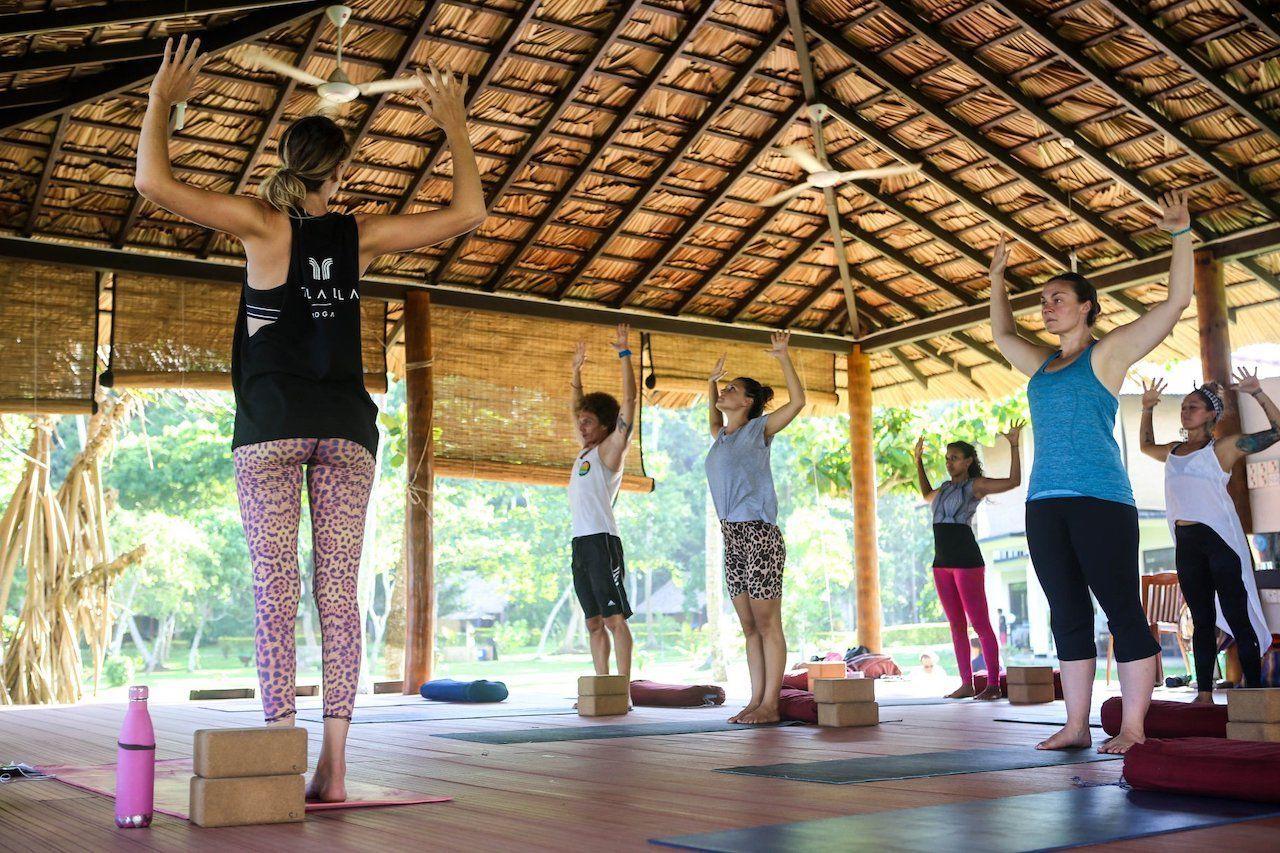
A yoga retreat changes the pace of a Sri Lanka journey.
Instead of waking for another transfer, the day may begin with a mat, a quiet garden, the sound of the ocean or cool hill-country air.
Sri Lanka Tourism includes yoga and meditation within the country's wellness landscape, often alongside Ayurveda, spas and slow-travel experiences. That makes yoga easy to integrate into a wider itinerary without pretending it is uniquely Sri Lankan in origin.
WHAT A YOGA RETREAT IS
A retreat is more than taking one hotel yoga class.
It creates a repeated daily rhythm: practice, meals, rest and enough time for the body to respond to the routine.
Some retreats are yoga-focused. Others combine yoga with surfing, Ayurveda, meditation, hiking or general wellness.
START WITH THE STYLE
Yoga is not one single class format.
A retreat might teach a dynamic flow, slower Hatha-style practice, restorative sessions, yin-style classes, breathwork or meditation-oriented movement.
Travelers should ask what the daily practice actually looks like instead of choosing only by the property photos.
BEGINNER-FRIENDLY DOES NOT MEAN EASY MARKETING
A genuine beginner-friendly retreat should explain poses, breathing and transitions rather than simply telling new students to copy the front row.
Props and modifications should be available.
Beginners should never be encouraged to force flexibility or attempt inversions for photographs.
FOR EXPERIENCED PRACTITIONERS
More experienced guests may want stronger sequencing, workshops, philosophy, pranayama or longer practice periods.
Even then, teacher quality matters more than the difficulty of the poses.
A retreat can be advanced in depth without being physically extreme.
TEACHER CREDENTIALS AND EXPERIENCE
Teacher-training certificates vary widely in depth and quality.
Ceylon Velo should ask the retreat about training background, teaching experience, class size and whether instructors are comfortable adapting practice for injuries or pregnancy.
A beautiful shala does not substitute for competent teaching.
MORNING PRACTICE
Early practice can suit Sri Lanka's climate because temperatures are often more comfortable before the day becomes hot.
Coastal humidity can still be intense, so hydration and pacing matter.
Outdoor classes should have a weather backup rather than forcing practice in unsafe heat, rain or slippery conditions.
EVENING PRACTICE
Evening classes are often slower and can help create a natural transition into dinner and rest.
Restorative or mobility-focused sessions can balance a day that included walking, surfing or travel.
Retreat schedules should avoid turning every hour into a wellness activity.
BREATHING AND MEDITATION
Many retreats include breathwork or meditation.
These practices can be valuable, but teachers should not make exaggerated medical claims about curing disease or replacing mental-health care.
Guests who feel dizzy, panicked or uncomfortable during breathing practices should be able to stop without pressure.
YOGA AND AYURVEDA
Sri Lanka Tourism describes yoga and meditation as common elements within Ayurveda wellness programmes.
Combining the two can work well when the schedule remains gentle.
Guests should not be placed into an intense yoga class immediately after heavy body treatments or when a practitioner has advised rest.
YOGA AND SURFING
Coastal Sri Lanka often brings yoga and surfing together because mobility, balance and recovery can complement time in the water.
However, two physically demanding sessions every day may be too much for beginners.
A premium retreat builds recovery into the program rather than treating exhaustion as success.
PREGNANCY
Pregnant travelers should disclose pregnancy before joining a class.
Some poses, deep twists, prolonged prone positions, strong breath-retention practices and overheating may be inappropriate depending on stage and individual circumstances.
Prenatal-qualified teaching is preferable for guests who want a structured practice during pregnancy.
BACK, NECK AND JOINT PROBLEMS
Yoga can be modified, but not every pose is appropriate for every injury.
Travelers with acute pain, recent surgery, disc problems, unstable joints or significant limitations should tell the teacher before class and follow medical advice.
A teacher should never diagnose an injury from the mat.
HEAT AND HYDRATION
Sri Lanka can be hot and humid, especially on the coast.
Drink normally through the day and avoid using dehydration as a supposed detox strategy.
Guests with heat sensitivity should choose shaded, ventilated or indoor classes when necessary.
FOOD AND PRACTICE
Large meals immediately before a strong class can feel uncomfortable.
Retreats usually work best with a schedule that leaves enough time between meals and practice.
Guests with diabetes or other conditions affected by meal timing should follow their own medical needs rather than rigid retreat rules.
SOLO TRAVELERS
Yoga retreats can be particularly comfortable for solo travelers because the schedule creates natural social contact without requiring constant group activity.
Look for retreats that balance communal meals and classes with genuine private time.
Forced sharing circles or personal disclosure should never be treated as mandatory.
COUPLES
Couples do not need identical yoga experience to enjoy a retreat together.
A good program allows one partner to choose a gentler class, skip a session or take a different activity without disrupting the day.
Wellness travel works better when participation is flexible.
CHOOSING THE SETTING
Coastal retreats offer ocean air, beach walks and easy pairing with surf or swimming.
Hill-country settings can provide cooler temperatures, greenery and a quieter rhythm.
Garden or inland retreats may offer the most privacy.
The best setting depends on whether the guest wants energy, nature, seclusion or convenience.
WHAT TO ASK BEFORE BOOKING
• What style of yoga is taught?
• Are classes suitable for complete beginners?
• Who are the teachers and what is their experience?
• How many classes are scheduled each day?
• Are mats and props provided?
• Can injuries, pregnancy or mobility limitations be accommodated?
• What happens if weather prevents outdoor practice?
WHAT TO BRING
• Comfortable breathable clothing
• Reusable water bottle
• Light layer for cooler hill-country mornings
• Any personal support or brace you normally use
• Your own mat only if you strongly prefer it - many retreats provide mats
RESPONSIBLE WELLNESS TRAVEL
Choose retreats that employ and credit teachers fairly, communicate honestly and avoid cultural claims they cannot support.
Yoga has South Asian roots, but a modern Sri Lankan retreat may include teachers and methods from many traditions.
It is better to describe the program accurately than to label everything 'ancient Sri Lankan yoga.'
Respect for origins is stronger than invented authenticity.
FREQUENTLY ASKED QUESTIONS
Do I need yoga experience? No, if the retreat genuinely offers beginner-level instruction.
How many classes a day? It varies. One or two well-taught sessions can be more useful than an overloaded schedule.
Can I skip a class? A quality retreat should allow rest and personal choice.
Can pregnant travelers join? Yes in some cases, but pregnancy should be disclosed and appropriately modified or prenatal-qualified teaching is preferable.
Is yoga a medical treatment? No. It may support wellbeing, but it should not replace necessary medical or mental-health care.
Where is best - coast or hills? Choose based on climate, desired activities and the style of retreat rather than assuming one region is universally better.
FINAL THOUGHTS
A strong yoga retreat is not measured by how many poses you complete or how photogenic the platform looks.
It is measured by the quality of teaching, the space to rest and whether the routine fits your body.
At Ceylon Velo, yoga should be curated as thoughtful slow travel: good instruction, a beautiful setting and enough freedom for the guest to make the experience their own.
Written By
Ceylon Velo
Lead Travel Curator at Ceylon Velo with a passion for uncovering the untold stories of the island.
Join the Journey
Subscribe to receive exclusive travel guides and island stories directly in your inbox.