
V
EXPLORE SRI LANKA
PLAN YOUR JOURNEY
CEYLON VELOSRI LANKA
Beaches & Ocean Experiences
Whale Watching in Mirissa: The Complete Guide
June 14, 2026 10 min read
RESPONSIBLE ENCOUNTERS WITH SRI LANKA'S OCEAN GIANTS
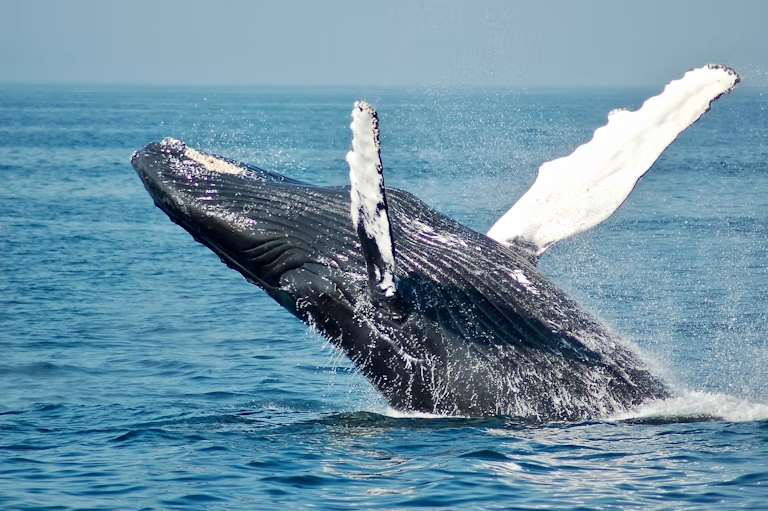
A whale breaks the surface for only a moment. There is a breath, a dark curve of back, perhaps a distant tail, and then the ocean closes again.
That uncertainty is exactly what makes whale watching different from an attraction with a timetable. Mirissa is one of Sri Lanka's best-known bases for heading into the southern Indian Ocean in search of whales and dolphins, but every trip depends on wildlife, weather and the behavior of the people observing them.
Official Sri Lanka Tourism identifies Dondra Point, accessible from Mirissa, as one of the country's ideal whale-watching locations. Its material mentions blue and humpback whales as well as dolphins, while the dedicated Mirissa page lists a wider range of cetaceans reported from southern waters.
WHY MIRISSA BECAME A WHALE-WATCHING BASE
Mirissa sits on Sri Lanka's south coast with access to deep offshore waters. The harbor provides a practical departure point, and whale watching developed into one of the town's signature tourism activities.
The attraction is obvious: blue whales are the largest animals on Earth, and seeing any large whale at sea can be extraordinary. Yet the popularity of the activity creates responsibility. Too many boats approaching too closely can turn a wildlife encounter into disturbance.
WHAT YOU MAY SEE
Species reported from southern Sri Lankan waters include blue whales, sperm whales, Bryde's whales and several dolphin species. Sightings vary with season, movement, feeding conditions and chance.
Do not book with anyone who guarantees a blue whale or promises a particular close-up encounter. Wild animals do not perform on schedule. A responsible operator explains possibility rather than certainty.
HOW A TYPICAL MORNING WORKS
Trips commonly begin early, when passengers gather near the harbor, receive instructions and board. Official Sri Lanka Tourism material describes Mirissa excursions beginning around the early morning and often lasting several hours, with duration dependent on sea conditions.
Once offshore, the crew searches for signs such as blows, bird activity or information shared across the area. Long periods may pass without a sighting. Patience is part of the experience.
When an animal is located, good observation means maintaining appropriate distance and direction rather than racing directly toward it.
CHOOSING A RESPONSIBLE OPERATOR
Operator choice is the most important decision a traveler makes. Sri Lanka Tourism notes Coast Guard monitoring of marine-mammal observation regulations in Mirissa. Travelers should favor licensed, safety-conscious operators who follow current rules.
Ask how the operator approaches whales, whether the crew explains observation rules, what safety equipment is carried and how many passengers the boat takes. A smaller boat is not automatically better; stability, crew competence, legal compliance and responsible behavior matter more.
Be cautious of marketing built around 'closest boat,' 'guaranteed whale' or aggressive pursuit.
ANIMAL WELFARE COMES FIRST
A whale surfacing near the boat is exciting, but the goal should never be to force proximity. Boats should not surround animals, block their direction of travel or repeatedly accelerate toward them.
Responsible whale watching gives animals space and allows them to determine the encounter. If a whale changes direction, dives repeatedly or appears disturbed, operators should respond conservatively.
The most ethical photograph may be a distant one.
SEA CONDITIONS AND SEASICKNESS
Mirissa trips operate in open ocean. Even travelers who feel fine on ferries can become seasick on a smaller vessel moving through swell.
If you are prone to motion sickness, discuss appropriate prevention with a pharmacist or medical professional before the trip. Eat according to the guidance for any medication you use, avoid excessive alcohol the night before and stay hydrated.
On board, fresh air and looking toward the horizon can help some travelers. Follow crew instructions about where it is safe to stand or sit.
SAFETY ON BOARD
Listen to the pre-departure briefing. Know where life jackets are and wear them when instructed. Keep children closely supervised and do not move around unnecessarily when the boat is traveling quickly or the sea is rough.
Protect cameras and phones from spray. Footwear with grip is useful. If conditions deteriorate and the captain returns early, that is a safety decision rather than a failed tour.
BEST SEASON
Official Sri Lanka Tourism information places the main southern whale- and dolphin-watching season around November to April. It also describes the south-coast beach season as generally calmer during the northeast-monsoon period.
Season does not equal guarantee. Wind, swell and wildlife movement can make individual days unsuitable or unproductive. Build flexibility into the itinerary when whale watching is a high priority.
WHAT TO BRING
• Light layers for the early start and wind on the water
• Sun protection, including sunscreen and a secure hat
• Drinking water if not supplied
• Any personally appropriate motion-sickness preparation
• Camera or binoculars with a secure strap
• A waterproof pouch or dry protection for electronics
• Patience and realistic expectations
PHOTOGRAPHY TIPS
Whales often surface briefly, so keeping the camera ready is more useful than constantly changing settings. A moderate telephoto lens can help without encouraging the boat to approach too closely.
Do not spend the entire encounter looking through a screen. Watch the animal first. If dolphins approach the boat naturally, use faster shutter speeds for movement, but never lean dangerously over rails for a photograph.
Respect any instructions from the crew regarding movement and positioning.
WHALE WATCHING WITH CHILDREN
Children can enjoy the experience, but parents should consider the early departure, several hours on a boat, sun exposure, toilet access, seasickness and the possibility of no major sighting.
Ask the operator about age policies, life jackets in appropriate sizes and the type of vessel. A child who is uncomfortable on boats may enjoy a different wildlife experience far more.
MIRISSA AFTER THE BOAT TRIP
After several hours at sea, do not over-schedule the rest of the day. Mirissa works well for a slow lunch, beach time or a relaxed afternoon.
Nearby Weligama is convenient for surfing, while Galle Fort can be visited on another day or later if energy allows. The best itinerary respects the fatigue created by an early start and ocean motion.
WHALE WATCHING AND CONSERVATION
Marine tourism can create economic reasons to value living whales, but only if the activity itself is managed responsibly. Travelers influence the market through the operators they choose.
Support businesses that communicate conservation, obey observation distances and accept that some trips will not produce dramatic sightings. Avoid litter, single-use waste where possible and any activity that involves feeding or manipulating wild marine animals.
FREQUENTLY ASKED QUESTIONS
Are whale sightings guaranteed?
No. These are wild animals, and no responsible operator should guarantee a specific species or encounter.
When is the main Mirissa season?
Official Sri Lanka Tourism information identifies roughly November to April for the southern whale-watching season.
How long is the trip?
Often several hours, with exact duration depending on sea conditions and wildlife activity.
Will I get seasick?
It is possible. Open-ocean motion affects people differently, so prepare in advance if you are susceptible.
Is whale watching ethical?
It can be when operators follow regulations, maintain appropriate distance and avoid chasing or surrounding animals. Operator choice matters.
What species can be seen?
Blue whales, sperm whales, Bryde's whales and several dolphin species are among those reported from southern Sri Lankan waters, but any individual trip may see different wildlife or none.
FINAL THOUGHTS
The best whale-watching morning is not necessarily the one with the closest whale. It is the one where a wild animal is encountered without being turned into a target.
Mirissa gives travelers access to a remarkable marine environment. Go with patience, choose the operator carefully and allow the ocean to decide what it reveals.
At Ceylon Velo, responsible observation comes before the photograph. That is how an extraordinary wildlife encounter remains extraordinary for the animals as well.
Written By
Ceylon Velo
Lead Travel Curator at Ceylon Velo with a passion for uncovering the untold stories of the island.
Join the Journey
Subscribe to receive exclusive travel guides and island stories directly in your inbox.