TRAVEL GUIDE
The Ultimate Guide to Exploring Sigiriya
May 20, 2026 10 min read
BACK TO DIARY
SIGIRIYA ROCK FORTRESS: SRI LANKA'S ANCIENT WONDER IN THE SKY
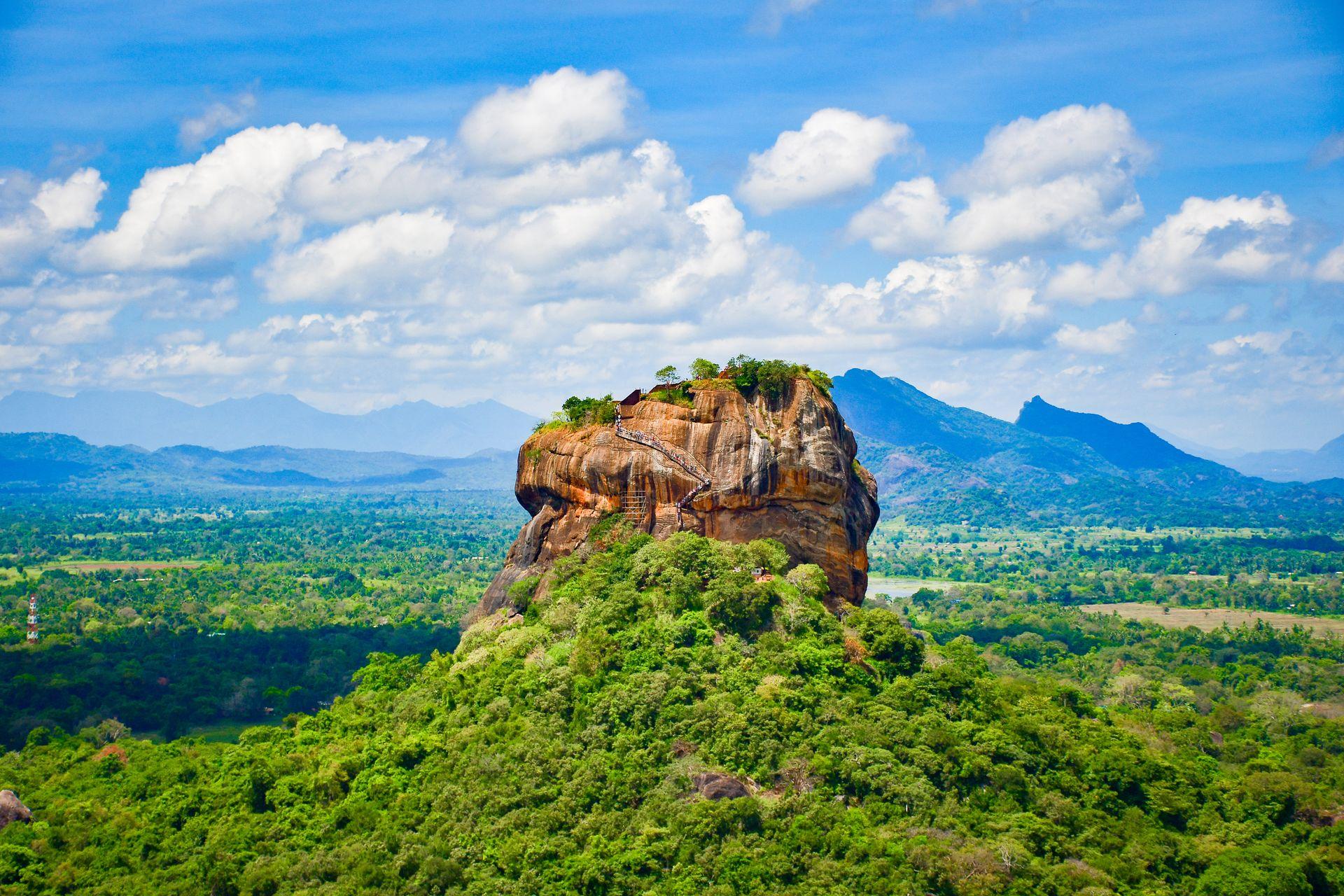
Imagine standing on top of a massive rock fortress nearly 200 meters above the surrounding jungle, with endless green landscapes stretching toward the horizon in every direction.
As the morning mist slowly disappears and the golden sunlight illuminates ancient ruins that have stood for more than 1,500 years, it becomes easy to understand why Sigiriya is considered one of the most extraordinary destinations in Asia.
Located in the heart of Sri Lanka’s Cultural Triangle, Sigiriya Rock Fortress is far more than a historical landmark. It is a masterpiece of engineering, architecture, urban planning, and artistic achievement that continues to captivate travelers from around the world.
Built during the reign of King Kashyapa in the 5th century AD, Sigiriya transformed a towering granite rock into one of the most sophisticated royal cities of the ancient world. Magnificent water gardens, advanced irrigation systems, breathtaking frescoes, defensive fortifications, and a palace in the sky combined to create a monument unlike any other.
Today, Sigiriya stands as a UNESCO World Heritage Site and one of Sri Lanka’s most iconic attractions. Visitors come not only to admire its remarkable history but also to experience the unforgettable journey to its summit, where panoramic views reveal the natural beauty that has surrounded this ancient fortress for centuries.
Whether you are a history enthusiast, an adventure traveler, a photographer, or someone seeking to discover the cultural soul of Sri Lanka, Sigiriya offers an experience that is both inspiring and unforgettable.
More than a fortress. More than a palace. Sigiriya is a journey into the heart of Sri Lanka’s extraordinary past.
WHERE IS SIGIRIYA?
Sigiriya is located in the heart of Sri Lanka’s Cultural Triangle, one of the most historically significant regions in South Asia.
Situated between the towns of Dambulla and Habarana in the country’s Central Province, Sigiriya enjoys a strategic location surrounded by ancient cities, wildlife reserves, forests, and traditional villages. This unique setting allows travelers to experience several of Sri Lanka’s most remarkable attractions within a relatively short distance.
The fortress rises dramatically from the flat plains below, creating a striking contrast against the surrounding landscape. Visible from kilometers away, the enormous rock dominates the horizon and immediately captures the attention of visitors approaching the area.
Its central location makes Sigiriya an ideal base for exploring many of Sri Lanka’s most famous destinations, including the sacred cave temples of Dambulla, the ancient city of Polonnaruwa, the elephant-filled grasslands of Minneriya National Park, and the breathtaking viewpoints of Pidurangala Rock.
DISTANCE FROM MAJOR CITIES
• Colombo to Sigiriya: approximately 170 km
• Kandy to Sigiriya: approximately 90 km
• Dambulla to Sigiriya: approximately 15 km
• Habarana to Sigiriya: approximately 15 km
Depending on traffic conditions, the journey from Colombo typically takes between three and four hours by road.
WHY THE LOCATION MATTERS
The location of Sigiriya was not chosen by accident. More than fifteen centuries ago, King Kashyapa selected this towering rock because it offered both security and visibility. Surrounded by dense forests and open plains, the fortress provided a natural defensive advantage against potential enemies.
Today, the same landscape that once protected a king provides visitors with some of the most spectacular views in Sri Lanka. Standing at the summit, travelers can see a vast panorama of forests, lakes, villages, and distant mountain ranges—a reminder of why Sigiriya remains one of the island’s most extraordinary destinations.
THE STORY OF KING KASHYAPA
Every great monument has a story. Sigiriya’s story is one of power, ambition, betrayal, fear, and tragedy—a tale that has fascinated historians and travelers for centuries. The fortress owes its existence to King Kashyapa, one of the most controversial rulers in Sri Lankan history.
In the 5th century AD, Sri Lanka was ruled by King Dhatusena, a powerful monarch who had unified much of the island. However, a struggle for succession emerged between his sons. Moggallana, the rightful heir to the throne, was expected to become the next king. Kashyapa, however, had different ambitions.
According to ancient chronicles, Kashyapa seized power after overthrowing his father. Fearing retaliation from Moggallana, who escaped to India, Kashyapa began searching for a location that could serve as both a royal palace and an impregnable fortress.
His choice was extraordinary. Instead of building a conventional capital city, he selected a gigantic granite rock rising nearly 200 meters above the surrounding plains. What followed was one of the most ambitious construction projects in the ancient world.
Kashyapa ordered the creation of a magnificent royal city around the rock. Engineers designed elaborate water gardens, moats, reservoirs, defensive walls, and landscaped terraces. High above the ground, workers constructed a palace complex on the summit, transforming the natural rock into a symbol of royal authority.
For nearly two decades, Sigiriya served as the heart of Kashyapa’s kingdom. Visitors arriving at the fortress would have been greeted by perfectly designed gardens, glittering pools, colorful frescoes, and the enormous Lion’s Gate that guarded the entrance to the palace above. Everything about Sigiriya was designed to inspire awe and demonstrate the king’s power.
THE TRAGIC END
Yet despite its beauty and strength, Sigiriya was built upon a foundation of fear. Kashyapa knew that Moggallana had not abandoned his claim to the throne. Years later, that fear became reality. Moggallana returned to Sri Lanka with an army determined to reclaim the kingdom. The two forces eventually met in battle near Sigiriya.
According to legend, during the confrontation Kashyapa’s elephant changed direction unexpectedly. His soldiers mistakenly believed he was retreating and began abandoning the battlefield. Realizing defeat was inevitable, Kashyapa chose to end his own life rather than be captured.
With the king’s death, the fortress lost its political importance. The royal palace was abandoned, and Sigiriya was later transformed into a Buddhist monastery that remained active for centuries.
THE RISE OF A CITY IN THE SKY: HOW SIGIRIYA WAS BUILT
Standing at the foot of Sigiriya today, it is difficult to imagine how ancient builders transformed a massive rock into one of the world’s most sophisticated royal cities. More than 1,500 years ago, without modern machinery, cranes, or advanced construction equipment, thousands of workers, engineers, artists, and craftsmen collaborated to create what many historians consider one of the greatest engineering achievements of the ancient world.
A CAREFULLY PLANNED ROYAL CAPITAL
• Defensive structures
• Water gardens
• Boulder gardens
• Terraced gardens
• Residential areas
• Religious sites
• The royal palace
THE MAGNIFICENT WATER GARDENS
Among Sigiriya’s most extraordinary features are its water gardens. These gardens are widely regarded as some of the oldest landscaped gardens in Asia. Designed with perfect symmetry, they include:
• Reflecting pools
• Fountains
• Artificial islands
• Water channels
• Reservoirs
What makes them truly remarkable is that many of these systems still function today. During the rainy season, water pressure generated through ancient engineering techniques can still activate some of the fountains. This achievement demonstrates an advanced understanding of hydraulics centuries ahead of its time.
THE BOULDER GARDENS
As visitors move closer to the rock, they enter the boulder gardens. Rather than removing natural rock formations, Sigiriya’s designers incorporated them into the city’s architecture. Massive boulders served as natural defensive barriers, observation points, meditation spaces, and foundations for buildings.
THE TERRACED GARDENS
Halfway up the rock, visitors encounter the terraced gardens. These carefully constructed terraces follow the natural contours of the landscape and create a gradual transition between the lower city and the royal palace above.
THE PALACE ABOVE THE CLOUDS
At the summit stood King Kashyapa’s palace. Imagine the scene over fifteen centuries ago: Royal halls decorated with vibrant colors, pools filled with water, private chambers overlooking endless forests, and servants, guards, advisors, and nobles moving through one of the most extraordinary royal residences ever built.
THE LION’S GATE AND THE JOURNEY TO THE SUMMIT
THE GREAT LION OF SIGIRIYA
Today, visitors are greeted by two enormous stone paws carved into the rock. These giant paws are all that remain of what was once one of the most impressive architectural features in ancient Sri Lanka. Historians believe the original entrance was designed in the shape of a massive lion. Travelers entering the royal palace would have climbed through the lion’s mouth before continuing toward the summit.
THE FINAL CLIMB
Beyond the Lion’s Gate lies the final section of the ascent. Modern metal staircases now help visitors navigate the steep rock face, but the climb still provides a thrilling experience. As you rise higher above the landscape, the views become increasingly spectacular.
BEST TIME TO VISIT SIGIRIYA & PHOTOGRAPHY GUIDE
THE BEST TIME OF DAY TO VISIT
• Sunrise and Early Morning: Cooler temperatures, fewer crowds, better visibility, soft golden light, and comfortable climbing conditions.
• Midday: While Sigiriya remains open during the middle of the day, temperatures can become quite intense. The exposed stairways and summit areas receive direct sunlight, making the climb more challenging.
• Late Afternoon: Late afternoon offers another excellent opportunity to visit. The softer light creates beautiful contrasts across the rock face and surrounding landscape.
THE BEST SEASONS TO VISIT
• December to April: Lower rainfall, sunny conditions, clear views, and excellent photography opportunities.
• May to September: The region remains accessible and enjoyable, although occasional rain showers may occur.
• October and November: These months can bring heavier rainfall, but visitor numbers are usually lower.
NEARBY ATTRACTIONS & THE PERFECT 2-DAY SIGIRIYA ITINERARY
• Pidurangala Rock: Located just a few minutes from Sigiriya, Pidurangala Rock has become one of Sri Lanka’s most popular viewpoints.
• Dambulla Cave Temple: Approximately 20 minutes from Sigiriya lies another UNESCO World Heritage Site containing ancient Buddhist murals.
• Minneriya National Park: Famous for 'The Gathering,' where hundreds of wild elephants congregate during the dry season.
Written By
Ceylon Velo
Lead Travel Curator at Ceylon Velo with a passion for uncovering the untold stories of the island.
Join the Journey
Subscribe to receive exclusive travel guides and island stories directly in your inbox.