
V
EXPLORE SRI LANKA
PLAN YOUR JOURNEY
CEYLON VELOSRI LANKA
Wildlife & Safari
Wilpattu National Park Safari: The Complete Guide
August 12, 2026 10 min read
LEOPARDS, SLOTH BEARS AND SRI LANKA'S GREAT VILLU WILDERNESS
Wilpattu is a safari for travelers who enjoy space, silence and uncertainty.
The Department of Wildlife Conservation's Wilpattu management plan describes it as Sri Lanka's largest protected area at 131,678 hectares.
It also notes an unspoilt western coastline, adjoining protected forests and sanctuaries, and a wetland system significant enough that Wilpattu and adjacent shallow marine areas have Ramsar status.
The park's defining visual feature is its network of villus - natural depressions and wetlands that break the forest into open areas where water and wildlife meet.
A LONG HISTORY OF PROTECTION
The DWC management plan records more than a century of protection in the Wilpattu landscape. Areas were protected as Game Sanctuary and Sportsman Reserves before the present National Park designation in 1938.
The park later endured a long closure during Sri Lanka's conflict and reopened in 2010. That history is part of why Wilpattu can feel less intensively developed than some other safari destinations.
WHAT MAKES A VILLU?
The villus are central to Wilpattu's identity. These shallow natural basins hold water to varying degrees and create open habitat within the surrounding forest.
For safari travelers, they function like windows: after long drives through vegetation, the road reaches an open wetland where deer, birds, crocodiles or other wildlife may be visible.
Water levels and wildlife use change with rainfall and season, so no two visits look exactly alike.
LEOPARDS
Wilpattu is one of Sri Lanka's important leopard habitats. Sightings can be extraordinary, particularly when a cat appears near a villu or crosses a forest road.
Yet the dense habitat and enormous area make patience essential. A leopard can disappear into vegetation almost instantly.
Responsible guiding focuses on tracks, behavior and habitat rather than promising a cat on demand.
SLOTH BEARS
Sloth bears are another sought-after Wilpattu species. They are unpredictable and often difficult to find, which makes a natural encounter especially memorable.
Fruit availability and seasonal ecology can influence bear movement, but visitors should avoid treating any month as a guarantee. A bear sighting remains a privilege, not an itinerary item that can be scheduled.
ELEPHANTS AND HERBIVORES
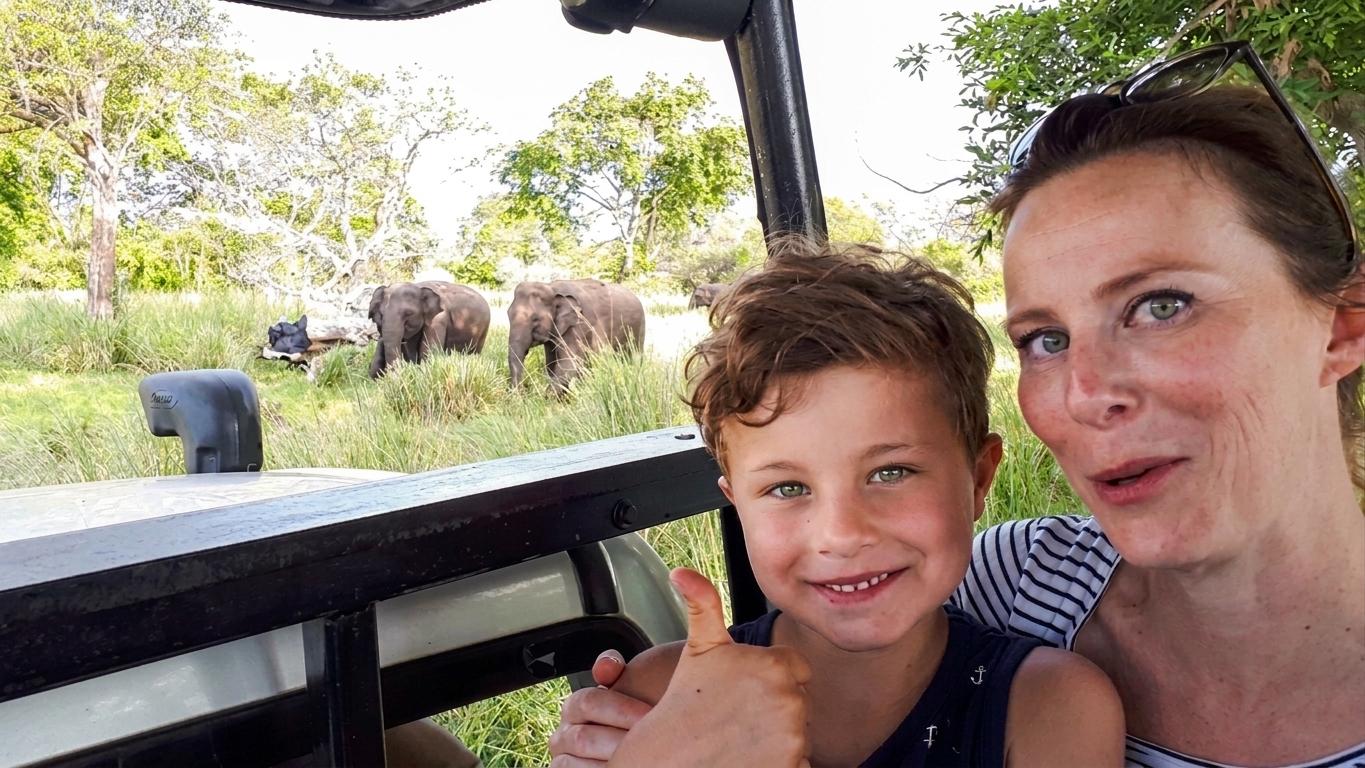
Elephants occur within the wider Wilpattu ecosystem, along with spotted deer, sambar, wild boar and buffalo.
These herbivores are important both in their own right and as part of the food web supporting large predators. Quiet observation around open areas can be more productive than constant driving.
BIRDS AND WETLAND LIFE
The villus and surrounding habitats support rich birdlife. Waterbirds, raptors and forest species can all add depth to a safari, while crocodiles and other reptiles may be encountered around wetlands.
Birders should bring binoculars and tell the guide their interests at the start; otherwise a safari team may naturally focus more heavily on mammals.
THE VALUE OF A SLOWER SAFARI
Wilpattu's greatest strength can also frustrate travelers who expect nonstop sightings. Distances are large and wildlife can remain hidden.
The park rewards people who enjoy the process: reading tracks, waiting at water, noticing birds and watching the landscape change.
For that reason, Wilpattu can be particularly satisfying for repeat visitors to Sri Lanka who have already experienced a faster, more crowded safari elsewhere.
SAFARI DURATION
A longer drive can make sense because of the park's scale, but duration should match the traveler. Heat, dust and hours in a jeep can become tiring.
Rather than automatically choosing the longest option, consider fitness, children, photography goals and the rest of the itinerary.
RESPONSIBLE VEHICLE BEHAVIOR
Stay on permitted roads, obey DWC instructions and never pressure a driver to go off-road or crowd wildlife.
When an animal is found, keep voices low and allow space. A leopard or bear changing behavior because of vehicles is a signal that the encounter has already gone too far.
PHOTOGRAPHY
Wilpattu's photography is as much about habitat as portraits. The reflection of forest around a villu, an empty road disappearing into woodland or a deer standing at the water's edge can tell the park's story better than a tightly cropped animal alone.
Use a telephoto lens responsibly and never encourage baiting, calling or disturbance.
WHAT TO BRING
• Binoculars
• Water and sun protection
• Neutral lightweight clothing
• Camera equipment protected from dust
• Patience for long wildlife searches
• A light layer for cool early starts
WILPATTU AND ANURADHAPURA
Wilpattu combines especially well with Anuradhapura. One side of the itinerary explores a sacred ancient capital; the other enters a vast protected wilderness.
This pairing avoids unnecessary long transfers and gives travelers two completely different expressions of Sri Lanka's north-central landscape.
CONSERVATION CHALLENGES
The DWC management plan identifies pressures including encroachment, poaching, invasive species, damage to archaeological sites, marine degradation, human-wildlife conflict and climate-related droughts and floods.
Visitors cannot solve these issues during one safari, but they can avoid adding pressure: use legitimate operators, follow park rules, leave no waste and support conservation-minded tourism.
FREQUENTLY ASKED QUESTIONS
• Is Wilpattu Sri Lanka's largest national park landscape? The DWC management plan identifies Wilpattu National Park as Sri Lanka's largest protected area, covering 131,678 hectares.
• What are villus? They are the distinctive natural wetland depressions that characterize the park.
• Can I see leopards? They occur in Wilpattu, but sightings are never guaranteed.
• Is Wilpattu good for sloth bears? It is an important habitat for them, but encounters remain unpredictable.
• Why choose Wilpattu over Yala? Travelers often choose it for scale, forest atmosphere, villus and a slower wilderness-focused safari style.
FINAL THOUGHTS
Wilpattu teaches a useful lesson about safari: wilderness does not exist to provide constant entertainment.
Sometimes the road is quiet. Then a villu opens beside the forest, a bird calls, deer lift their heads, or a leopard appears for a few seconds before disappearing again.
The waiting gives the sighting meaning.
At Ceylon Velo, Wilpattu is designed for travelers willing to let the landscape set the pace.
Written By
Ceylon Velo
Lead Travel Curator at Ceylon Velo with a passion for uncovering the untold stories of the island.
Join the Journey
Subscribe to receive exclusive travel guides and island stories directly in your inbox.