
V
EXPLORE SRI LANKA
PLAN YOUR JOURNEY
CEYLON VELOSRI LANKA
Tea & Plantation Experiences
Tea Picking Experience: The Complete Guide
July 3, 2026 8 min read
TWO LEAVES, A BUD AND THE PEOPLE BEHIND CEYLON TEA
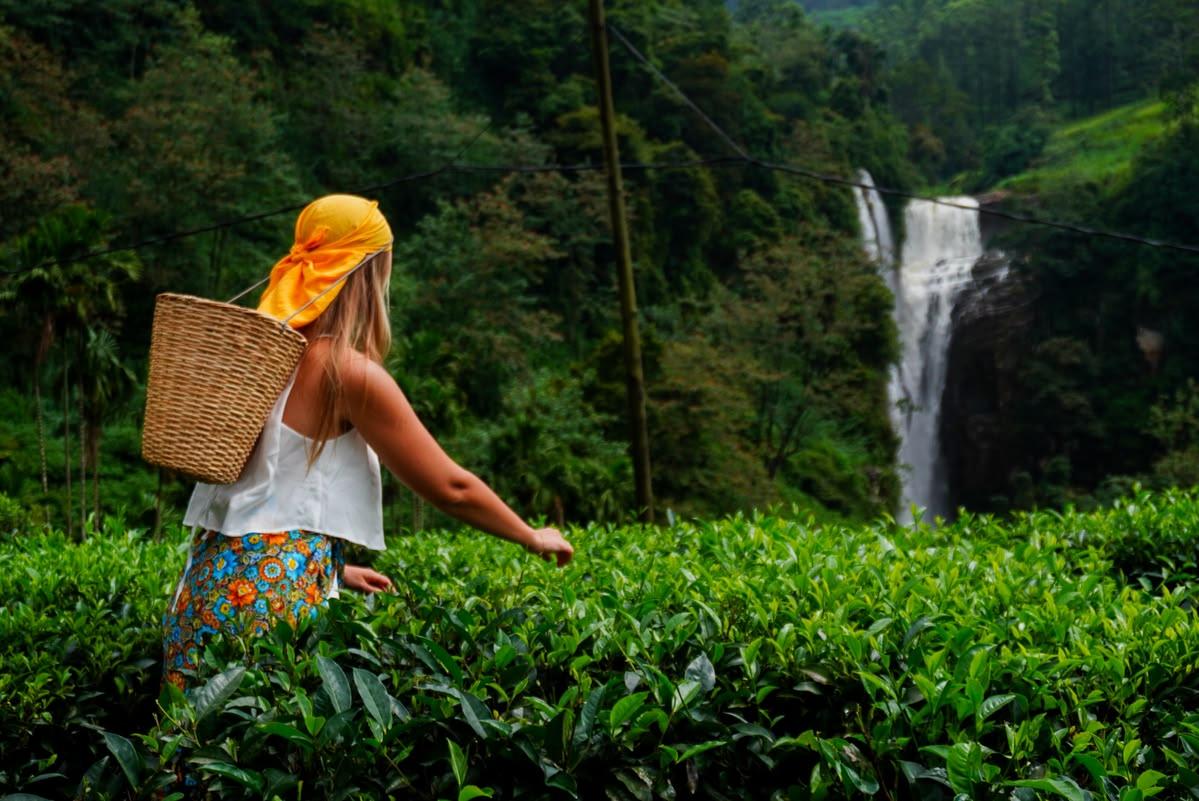
Tea country is beautiful from a train window, but the landscape looks different once you stand between the bushes and understand what must be selected by hand.
The Sri Lanka Tea Board describes quality plucking as the careful removal of the tender upper growth - the famous 'two leaves and a bud' - while leaving the stem undamaged. It notes that plucking requires discrimination and dexterity and is performed mainly by women.
A responsible tea-picking experience begins with that reality: this is skilled agricultural labor, not simply a picturesque activity invented for visitors.
UNDERSTANDING THE TEA BUSH
Commercial tea is repeatedly pruned and maintained so that fresh shoots grow within reach of pluckers.
The harvest is not a matter of stripping every green leaf. Quality depends on selecting tender new growth while leaving coarser material and the plant structure behind.
Once travelers understand this, the plantation changes visually: what looked like an endless green surface becomes thousands of individual decisions.
TWO LEAVES AND A BUD
The Sri Lanka Tea Board repeatedly identifies 'two leaves and a bud' as the classic quality standard for plucking.
The phrase refers to the tender bud at the tip of a shoot and the two youngest leaves below it.
Skilled pluckers evaluate growth rapidly as they move through the field.
Coarser plucking can reduce quality, which is why speed alone is not enough.
THE SKILL OF PROFESSIONAL PLUCKING
Tea Board material notes that a skilled plucker can collect a substantial quantity of fresh leaf in a day.
The physical work combines repetitive hand movement, walking on slopes, carrying weight and making rapid quality decisions.
A visitor trying the technique for a few minutes should not confuse participation with mastery.
The most respectful interpretation is to leave impressed by how difficult professional plucking actually is.
WHO DOES THE WORK?
Sri Lanka's plantation labor history is deeply connected with Tamil estate communities whose ancestors were brought to the island during the colonial plantation period.
Today, women remain highly visible in field plucking.
A tourism experience should acknowledge workers as people with lives, families, skills and rights - not as colorful elements in a landscape photograph.
Good guides should be able to discuss the human side of tea without romanticizing hardship.
WHAT A VISITOR EXPERIENCE SHOULD LOOK LIKE
A well-designed experience begins with an explanation of the estate and the plucking standard.
If visitor participation is permitted, the guide demonstrates how to identify the correct shoot and where to break it.
A small basket or collection can be used for learning, but the activity should remain supervised and non-disruptive.
The visit can then continue to weighing, factory processing and tasting.
WHAT IT SHOULD NOT BECOME
A tea-picking experience should not pressure workers into staged photographs, costumes or artificial performances for tourists.
Visitors should not enter working fields without permission, damage bushes, interfere with harvest or treat baskets and tools as props without context.
Ceylon Velo's standard is simple: education and dignity come before social-media content.
TEA IS PLUCKED YEAR-ROUND
The Sri Lanka Tea Board states that plucking continues throughout the year, while different growing regions produce their best teas at different times because of climatic variation.
This means there is no single nationwide 'tea-picking season' comparable to a once-a-year fruit harvest.
However, rainfall, estate schedules and plucking rounds determine what visitors actually see on a given day.
THE IMPORTANCE OF ELEVATION AND REGION
Sri Lanka's tea country spans different elevations and climatic zones. That variation affects growth and the character of finished teas.
Highland estates around Nuwara Eliya create a different landscape and tea style from lower regions.
Uva, Dimbula, Kandy and other recognized tea areas have their own climatic identities.
A plantation visit is more meaningful when the guide explains where you are in this larger tea geography.
WEATHER IN THE FIELDS
Tea country can be cool, sunny, misty and wet within a short period.
Paths may become muddy and slopes slippery.
Wear shoes with grip, use sun protection when conditions are bright and carry a light rain layer.
After heavy rain or during unsafe conditions, field activities may be limited. That is normal agricultural reality.
PHOTOGRAPHY AND CONSENT
Tea fields are exceptionally photogenic, but workers are not scenery.
Ask permission before taking close portraits.
If someone does not want to be photographed, accept it immediately.
Wide landscape images can communicate the scale of the estate without turning individual workers into unwilling subjects.
TEA PICKING WITH CHILDREN
Children can learn a great deal from a carefully supervised plantation walk: where food and drink come from, how plants are harvested and why skilled labor matters.
Keep children on safe paths, away from machinery and steep edges, and make sure they understand not to pull leaves randomly from working bushes.
FROM PLUCKING TO WEIGHING
Freshly collected leaf is weighed before entering the manufacturing process.
This creates the bridge between the field and factory.
A combined experience can show how something delicate and green in a basket becomes the dark dry tea seen in a shop.
That transformation is far more memorable after the traveler has personally examined the correct shoot on the bush.
FROM FACTORY TO CUP
After weighing, black-tea manufacture proceeds through withering, rolling, oxidation, drying and sorting, as described by the Sri Lanka Tea Board.
Ending the experience with a tasting completes the chain.
Try the tea plain first so you can notice aroma and character before adding milk or sugar.
SUPPORTING BETTER TEA TOURISM
Choose estates and guides that provide meaningful interpretation and treat workers respectfully.
Where possible, support businesses that are transparent about the origin of the tea and that allow visitors to learn rather than merely pose.
Responsible tourism cannot solve every labor issue in the plantation sector, but it can avoid making those issues invisible.
WHAT TO BRING
• Walking shoes with good grip
• Light rain protection
• Sun protection
• Drinking water
• Camera used with consent
• A light warm layer for higher elevations
• Respect for the fact that you are entering a workplace
TEA PICKING VS TEA FACTORY TOUR
Choose tea picking if your priority is landscape, agriculture, people and the skill of harvesting.
Choose a factory tour if your priority is manufacturing, machinery, tea grades and tasting.
Choose both for the strongest experience.
Together they tell the full leaf-to-cup story.
FREQUENTLY ASKED QUESTIONS
What should be picked? The Tea Board identifies the tender 'two leaves and a bud' as the classic quality standard.
Is tea picked only in one season? No. The Tea Board says plucking continues all year, though regional quality seasons vary.
Can tourists pick tea? Some estates permit supervised participation. It depends on the property and current operations.
Is tea picking easy? No. Professional plucking requires speed, judgment, physical endurance and experience.
Can I photograph tea workers? Ask permission before close photographs and respect any refusal.
Should I combine it with a factory? Yes. A factory tour and tasting complete the leaf-to-cup story.
FINAL THOUGHTS
Tea fields are among Sri Lanka's most photographed landscapes, but their beauty becomes more meaningful when the work inside them is visible.
The essential lesson is simple: the finished cup begins with a person making thousands of careful choices among green shoots.
At Ceylon Velo, a tea-picking experience should leave travelers with more respect for that skill than they had when they arrived.
Written By
Ceylon Velo
Lead Travel Curator at Ceylon Velo with a passion for uncovering the untold stories of the island.
Join the Journey
Subscribe to receive exclusive travel guides and island stories directly in your inbox.