
V
EXPLORE SRI LANKA
PLAN YOUR JOURNEY
CEYLON VELOSRI LANKA
Train Journeys
Nine Arch Bridge: The Complete Guide
July 3, 2026 8 min read
VIEWS, TRAIN CROSSINGS, PHOTOGRAPHY AND RAILWAY SAFETY IN ELLA
Nine Arch Bridge is one of those places where engineering and landscape become inseparable.
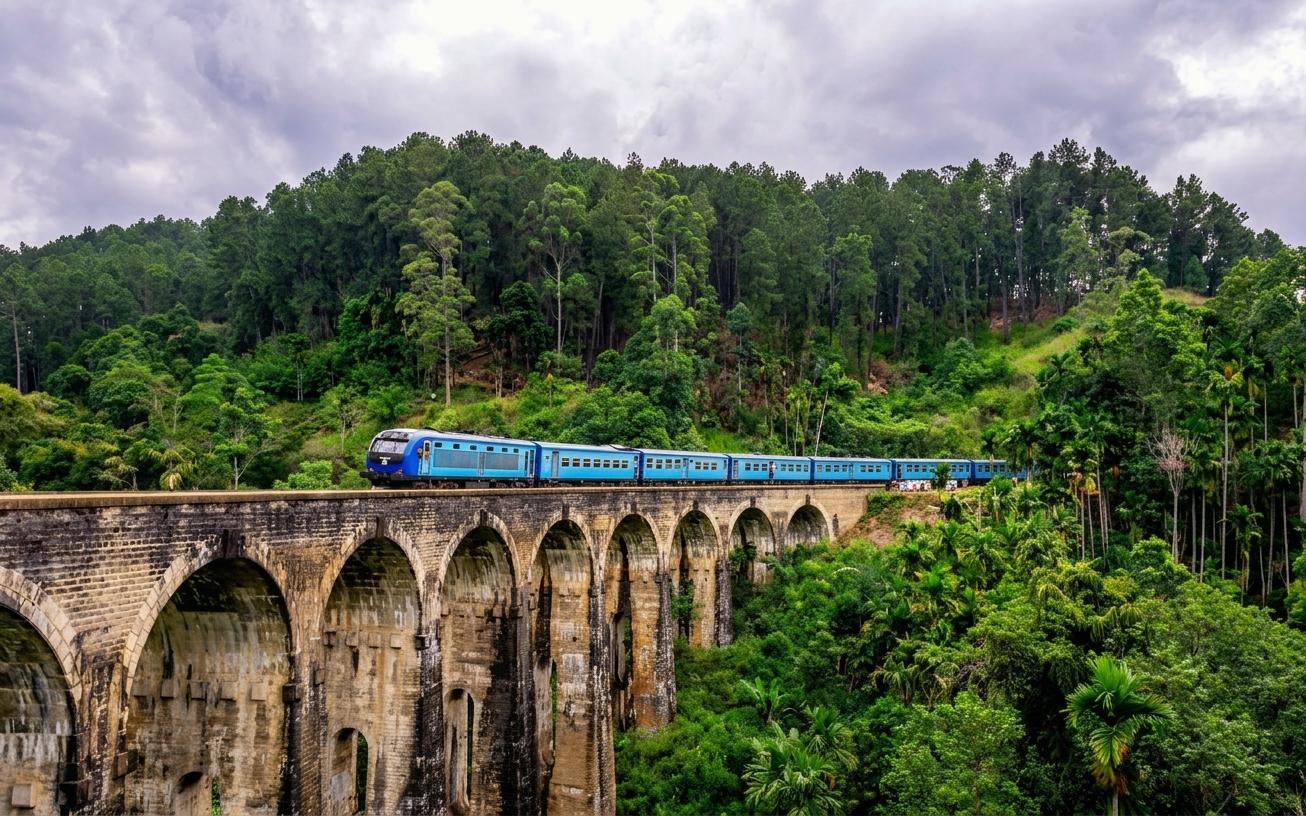
The viaduct sits below the hills around Ella, its arches crossing a green valley while the railway continues toward the high-country stations beyond.
Official Sri Lanka Tourism repeatedly features the bridge in Ella destination imagery, and it has become one of the visual symbols of Sri Lanka's hill-country railway.
Yet the strongest visit is not about standing on the track for a photograph. It is about seeing how the railway was fitted into the mountain landscape and experiencing the bridge safely.
WHY THE BRIDGE IS SO PHOTOGENIC
The structure has a strong rhythm: repeating arches below, railway line above, vegetation wrapping around both sides and hills rising in the background.
That geometry makes it easy to photograph from several directions, while mist, sun and passing trains change the mood throughout the day.
The setting matters as much as the bridge itself. Remove the surrounding forest and tea-country atmosphere, and the image would lose much of its character.
THE RAILWAY CONTEXT
Nine Arch Bridge belongs to Sri Lanka's active hill-country railway, not to a closed heritage park.
Trains serving Ella and the Badulla line continue to use the route. Official Sri Lanka Railways publishes current service information and reservation details for the main line.
This means visitors must behave as railway users would expect around live infrastructure: remain alert, obey instructions and never assume the track is safe because no train is visible.
REACHING THE BRIDGE
Travelers commonly approach from Ella-area walking paths or road access points, with the exact route depending on accommodation, weather and local conditions.
Some paths pass through forested or tea-country terrain and can become muddy.
A local guide is not essential for every visitor, but it can be useful for families, poor weather or travelers wanting the simplest access.
Avoid shortcuts through private land unless access is clearly permitted.
THE BEST VIEWPOINTS
One of the most attractive aspects of Nine Arch Bridge is that there is no single mandatory viewpoint.
Lower valley positions emphasize the height of the arches.
Higher side views show the bridge curving into the greenery.
A more distant composition can include the surrounding hills and make the structure feel smaller within the landscape.
Choose established, stable positions. Do not climb retaining walls, stand on dangerous edges or enter restricted railway areas for a different angle.
SEEING A TRAIN CROSS
A train crossing can transform the scene, but it should be treated as a bonus.
Railway schedules can change because of delays, weather, maintenance or operational decisions.
Local estimates may help, but no travel article can guarantee the exact minute a train will arrive.
If a crossing is important to you, check current information on the day and arrive with enough time to wait safely.
RAILWAY SAFETY
This is the most important practical section. The line is active.
Do not sit on rails, walk through tunnels for photographs, use headphones that block train sound or stand in the middle of the track while waiting for a train.
Move to a clearly safe position well before a train approaches.
Never rely on a photographer or social-media crowd to decide what is safe.
If railway staff or local authorities instruct visitors to move, comply immediately.
BEST TIME OF DAY
Early morning is an excellent default. Temperatures are cooler, the paths are easier before the day's strongest heat and the valley can be beautifully atmospheric with light mist.
Late afternoon can produce warmer color and softer contrast.
Midday is still workable, especially on cloudy days, but shadows may be harsher.
WEATHER
Rain changes everything: paths can become slippery, the valley may mist over and camera gear needs protection.
Ella's highland weather can change rapidly. A clear morning can become misty, and rain may continue long enough to make steep paths uncomfortable.
Carry light rain protection and footwear with grip.
During thunderstorms, avoid exposed viewpoints and railway infrastructure.
Mist is not always a disappointment. It can create one of the most atmospheric versions of the bridge.
PHOTOGRAPHY GUIDE
A wide lens is useful from close positions, while a moderate telephoto lens can compress the bridge and hills from farther away.
Use the arches as repeating shapes and allow the surrounding greenery to frame the structure.
When a train approaches, prepare your settings before it reaches the bridge instead of moving into an unsafe position at the last second.
Do not use the track itself as a portrait studio.
NINE ARCH BRIDGE AND LITTLE ADAM'S PEAK
These are often paired because they sit within the same broader Ella sightseeing area and offer complementary experiences.
Little Adam's Peak provides a high viewpoint and gentle hike.
Nine Arch Bridge adds railway heritage and valley scenery.
A relaxed combination is better than rushing between them.
Start early, walk at an easy pace and include time to wait for a train only if the schedule supports it.
NINE ARCH BRIDGE AND ELLA ROCK
Ella Rock is a longer and more demanding hike.
Travelers who complete it early can visit the bridge later, but trying to combine every major Ella sight in one day can become exhausting.
A better itinerary often spreads Ella Rock and the Little Adam's Peak/Nine Arch combination across separate days.
FAMILIES AND OLDER TRAVELERS
Nine Arch Bridge can work well for families, but route choice matters.
Some access paths are uneven and muddy after rain.
Choose the easiest available approach for the group, supervise children closely around the active railway and do not allow them onto unsafe track areas for photographs.
Older travelers may prefer road-assisted access with a shorter walk rather than a longer trail from town.
RESPONSIBLE VISITING
The bridge sits within a lived-in landscape of railway operations, local homes, paths and tourism businesses.
Keep noise reasonable, do not litter, avoid blocking access for residents and support local vendors responsibly.
Most importantly, do not normalize unsafe railway behavior simply because many other visitors are doing it.
WHAT TO BRING
• Comfortable shoes with grip
• Drinking water
• Sun protection
• Light rain layer
• Camera or phone with weather protection
• A little patience if waiting for a train
FREQUENTLY ASKED QUESTIONS
Is Nine Arch Bridge an active railway bridge? Yes. Trains continue to use the hill-country line, so railway safety is essential.
Can I know exactly when the train will cross? Check current railway information and local updates, but delays and operational changes mean exact timing is never guaranteed.
What is the best time to visit? Early morning is a strong choice for cooler weather and softer light.
Can I combine it with Little Adam's Peak? Yes. They are one of Ella's best-known paired experiences.
Do I need a guide? Not necessarily, but one can help with the easiest access and local context.
Is it safe to stand on the railway line? Treat the track as active railway infrastructure. Stay in safe areas and follow railway or local instructions.
FINAL THOUGHTS
Nine Arch Bridge is famous because it photographs beautifully, but its deeper appeal is the relationship between railway and landscape.
A train appears briefly, crosses the arches and disappears into the hills. The bridge remains, framed by forest and mountain weather.
At Ceylon Velo, we plan the visit around that atmosphere - with enough time to enjoy the scene and no photograph worth compromising safety.
Written By
Ceylon Velo
Lead Travel Curator at Ceylon Velo with a passion for uncovering the untold stories of the island.
Join the Journey
Subscribe to receive exclusive travel guides and island stories directly in your inbox.