
V
EXPLORE SRI LANKA
PLAN YOUR JOURNEY
CEYLON VELOSRI LANKA
Authentic Sri Lankan Experiences
Lagoon Safaris: The Complete Guide
August 23, 2026 8 min read
BENTOTA, MANGROVES, WILDLIFE AND RESPONSIBLE RIVER TRAVEL
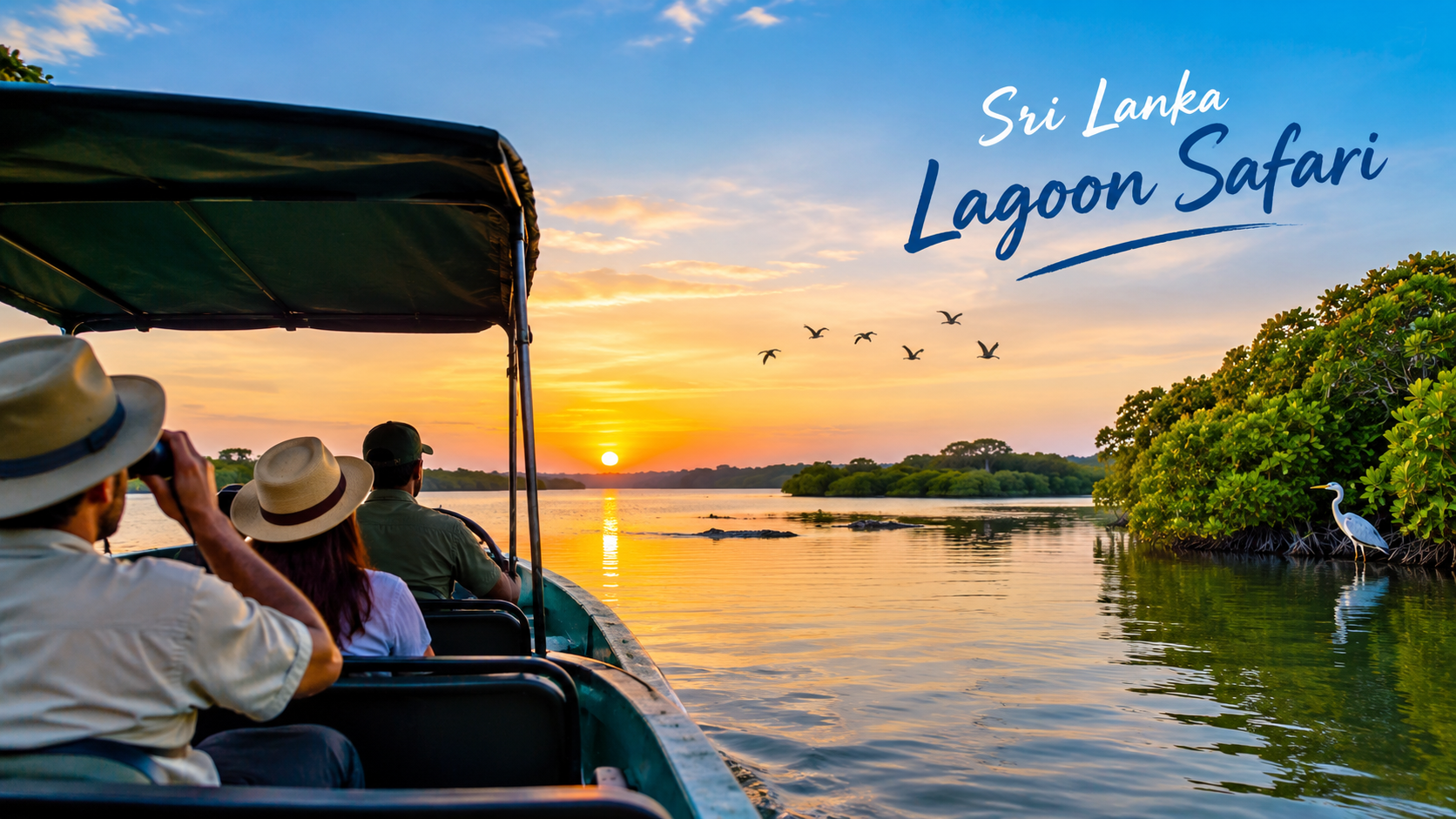
A lagoon safari shows a different side of Sri Lanka's coastal landscape.
Instead of open ocean, the water is sheltered by riverbanks, mangroves, islands and estuary vegetation. Boats move past fishing activity, bird habitat and small river communities at a slower pace.
Sri Lanka Tourism specifically describes the Bentara Ganga at Bentota as a lagoon set in tropical greenery, dotted with islets rich in birdlife. That makes the Bentota area a natural base for this type of experience.
WHAT A LAGOON SAFARI IS
A lagoon safari is a guided boat journey through a river, estuary, lagoon or mangrove system. The focus may be wildlife, scenery, fishing culture, mangrove ecology or a mix of all four.
Unlike a national-park safari, sightings are less about large mammals and more about birds, reptiles, water movement and the life of the river.
MANGROVES
Mangroves are one of the most distinctive elements of tropical lagoon systems. Their roots create shelter for aquatic life and help stabilize shorelines.
Visitors should avoid touching or breaking branches, and boats should not force their way into narrow areas simply to get a photograph.
BIRDLIFE
Kingfishers, herons, egrets and other waterbirds may be seen depending on location and season.
Wildlife viewing should be treated as uncertain by nature. A good guide explains behavior and habitat instead of guaranteeing specific species.
REPTILES AND OTHER WILDLIFE
Some lagoon systems may support monitor lizards, crocodilians or other reptiles, but their presence and visibility vary.
Operators should not bait or feed animals to manufacture sightings. A real wildlife experience is better than a guaranteed staged encounter.
FISHING AND LOCAL LIVELIHOODS
Lagoons are workplaces as well as tourism spaces.
Fishers, boat operators and riverbank families may depend on the water for income.
Tour boats should slow down near working nets, avoid damaging gear and give priority to local users.
BOAT CHOICE
Small motorboats are common because they can cover distance efficiently.
The best boat is not simply the fastest one. Stability, life jackets, maintenance, shade and the skill of the operator matter more.
Where a quieter craft is appropriate and available, it can create a more intimate experience.
LIFE JACKETS
Appropriate flotation equipment should be available for all guests.
Children need equipment that actually fits rather than oversized adult life jackets.
Guests should follow the operator's instructions even on calm-looking water.
WEATHER AND WATER CONDITIONS
Rain, wind, current and visibility can change the experience quickly.
Heavy rain upstream can affect river conditions even if the departure point looks calm.
A responsible operator may delay, shorten or cancel.
BEST TIME OF DAY
Early morning and late afternoon often provide softer light, lower heat and good bird activity.
Midday can still work, especially when the boat has shade, but the atmosphere may feel less comfortable.
The best timing depends on the specific lagoon and weather.
PHOTOGRAPHY
A longer lens is useful for birds because it allows respectful distance.
Do not ask the driver to chase wildlife or accelerate toward a bird that has just landed.
Wide-angle images of mangrove tunnels, reflections and river life often tell the place better than one close animal shot.
NOISE
Keep music off and voices moderate in wildlife zones.
Loud boats and shouting reduce the sense of nature and can disturb animals and nearby residents.
A premium lagoon safari should feel calm.
FAMILIES
Lagoon safaris can be excellent for families because they require less walking than many outdoor activities.
Children should remain seated where instructed and wear suitable flotation equipment.
Very young children may need shorter routes and better sun protection.
SUN AND HEAT
Water reflects sunlight, so exposure can be stronger than expected.
Bring a hat, drinking water and sun protection.
Choose reef- and environment-conscious products where relevant and avoid applying oily products immediately before handling shared equipment.
MOSQUITOES AND INSECTS
Mangrove and wetland environments can have mosquitoes and other insects, particularly around dawn and dusk.
Light clothing that covers more skin can help.
Travelers should follow current health advice appropriate to the area.
COMMUNITY RESPECT
Riverbank homes are private spaces.
Do not photograph people bathing, washing, working or relaxing at close range without permission.
The fact that a tour boat can see into a home does not make that home a tourist attraction.
AVOIDING STAGED ANIMAL STOPS
Some tourism operations may offer captive or habituated animal interactions.
Ceylon Velo should carefully screen these and avoid experiences that depend on wildlife handling, feeding or distress for photographs.
The lagoon itself is enough.
COMBINING WITH BENTOTA
Bentota is particularly well suited because the river and lagoon environment sits beside a major beach destination.
A calm boat experience can balance water sports or a beach day.
Early-morning lagoon travel followed by breakfast is often a better rhythm than forcing the activity into midday heat.
FREQUENTLY ASKED QUESTIONS
Where can I do a lagoon safari? Bentota's Bentara Ganga is one well-known option, and other lagoon and mangrove systems exist around Sri Lanka.
Will I definitely see wildlife? No responsible nature operator should guarantee wild animal sightings.
Are lagoon safaris suitable for children? Often yes, provided the boat is stable and properly fitted life jackets are available.
What time is best? Early morning and late afternoon often offer pleasant light and conditions.
Can I feed animals? No. Feeding changes behavior and can create unsafe or artificial encounters.
What should I bring? Sun protection, water, light clothing, camera and respect for wildlife and river communities.
FINAL THOUGHTS
A lagoon safari is successful when very little happens quickly.
The boat slows, a bird crosses the water, mangrove roots appear from shadow and the river becomes the main event.
At Ceylon Velo, that quietness is the product: a nature experience built around observation, local knowledge and minimal disturbance.
Written By
Ceylon Velo
Lead Travel Curator at Ceylon Velo with a passion for uncovering the untold stories of the island.
Join the Journey
Subscribe to receive exclusive travel guides and island stories directly in your inbox.