
V
EXPLORE SRI LANKA
PLAN YOUR JOURNEY
CEYLON VELOSRI LANKA
Authentic Sri Lankan Experiences
Cinnamon Plantation Tours: The Complete Guide
June 5, 2026 8 min read
GROWING, PEELING AND THE PEOPLE BEHIND SRI LANKA'S CINNAMON STORY
Cinnamon is easy to recognize in a kitchen and surprisingly difficult to understand until you see how it is made.
Sri Lanka Tourism promotes spice gardens as places where travelers can see cinnamon, pepper, cardamom and other crops at their source and learn about the island's long spice history.
A focused cinnamon plantation visit goes one step further: it shows the tree, the bark, the peeling technique and the human skill that turns fresh material into the familiar quill.
CEYLON CINNAMON AND SRI LANKA
Sri Lanka is historically and commercially associated with Ceylon Cinnamon.
Travel content should avoid exaggerated global market statistics unless they are current and verified, but the cultural connection itself is well established.
The spice became part of the island's trade history long before modern tourism.
THE PLANT
Cinnamon comes from the bark of trees in the Cinnamomum genus.
On a plantation, the guide can explain how plants are managed and how suitable shoots are selected for harvest.
Seeing the living plant helps travelers understand that cinnamon is not a seed, fruit or root.
HARVESTING
Harvesting schedules depend on plantation management, weather and the condition of the shoots.
A visitor should not be promised a full live harvest every day of the year.
When active work is unavailable, a high-quality guide can still explain the process using prepared material.
PEELING: THE SKILLED CORE OF THE EXPERIENCE
The most impressive part of the process is the careful removal and preparation of inner bark.
Experienced peelers work with speed and control that takes time to develop.
Tourism should make that skill visible and ensure the person demonstrating it is treated as a professional, not a prop.
FROM BARK TO QUILL
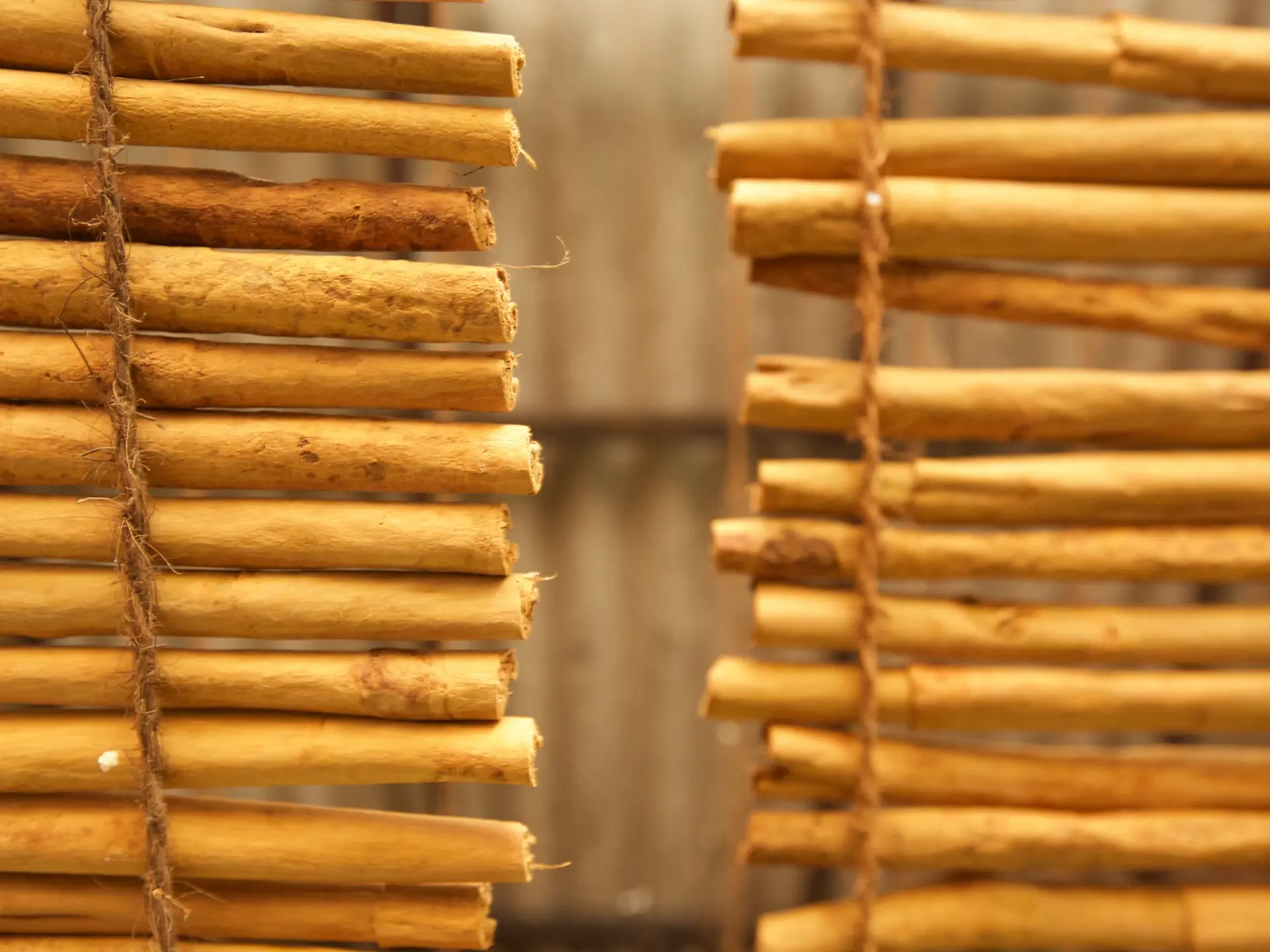
Prepared strips of inner bark are layered and shaped into long quills before drying.
The finished structure looks simple, but it reflects a sequence of skilled handling.
A close demonstration can show why true quill production is different from simply drying bark pieces.
DRYING AND STORAGE
Drying reduces moisture and helps stabilize the cinnamon.
Clean handling and storage matter because spices readily absorb moisture and odors.
A plantation tour should show realistic post-harvest practices rather than only the scenic growing area.
GRADES AND PRODUCT FORMS
Cinnamon may be sold as quills, cut pieces or powder, with commercial grading systems used by the industry.
For general travelers, the useful lesson is to understand that appearance, thickness, cleanliness and processing quality affect the final product.
Do not oversimplify grades into a single universal good-to-bad ranking without proper context.
SMELL AND TASTE
Freshly handled cinnamon can feel more floral, sweet and complex than old supermarket powder.
A tasting may include tea, fruit, dessert or a small culinary sample.
The best experience helps travelers notice aroma rather than overwhelming them with sugar.
CINNAMON AND SRI LANKAN COOKING
Cinnamon appears in both savory and sweet preparations.
A plantation visit pairs naturally with a cooking experience because travelers can immediately see how the spice functions in curries, rice dishes, desserts or drinks.
This creates a strong farm-to-kitchen narrative.
BUYING CINNAMON
Buying directly from a producer can be a meaningful way to support the local value chain.
Packaging should clearly identify the product, and travelers should follow destination-country rules when carrying food or plant products home.
Purchase should remain optional, not the hidden purpose of the visit.
FAIR PAYMENT AND LOCAL BENEFIT
Growers, peelers, guides and hosts should all benefit from a tourism product built around their knowledge.
Ceylon Velo should agree rates clearly and avoid demanding long demonstrations for minimal payment.
Premium tourism should make traditional skill more valuable, not cheaper.
PHOTOGRAPHY
Plantation work is highly visual, especially peeling and quill preparation.
Ask before photographing workers closely.
Do not interrupt delicate handwork or ask someone to repeat risky tool movements only for video.
CHILDREN
Cinnamon tours can work well for families because smell, touch and simple demonstrations are easy to understand.
Children should stay away from sharp peeling tools unless a safe, specifically designed activity is provided.
A tasting or simple spice-identification game can make the experience more engaging.
SEASON AND WEATHER
Plantation conditions vary through the year.
Rain can change access, work schedules and drying practices.
Ceylon Velo should present the tour as a process-learning experience rather than guaranteeing every agricultural stage live on the day.
SPICE GARDEN VS CINNAMON PLANTATION
A general spice garden introduces many plants in one stop.
A cinnamon-focused plantation gives more time to one crop and the people who process it.
Travelers interested in food, agriculture or craft skill will usually gain more from the focused version.
WHERE IT FITS BEST
Southern Sri Lanka is a natural place to include cinnamon within a beach or cultural itinerary.
It can pair well with Bentota, Galle, village experiences and cooking.
Keeping the visit relatively small and personal protects the sense of working agriculture.
FREQUENTLY ASKED QUESTIONS
Will I see cinnamon being peeled? Possibly, but live work depends on plantation schedules and conditions. A responsible operator should not guarantee a staged harvest every day.
Can I try peeling? Only if the host provides a safe supervised activity. Professional peeling uses sharp tools and skilled technique.
Can I buy cinnamon? Often yes, but buying should be optional.
Is this the same as a spice garden? No. A cinnamon plantation tour focuses more deeply on one crop and its processing.
Is it suitable for children? Yes, especially when the experience emphasizes smell, taste and safe demonstrations.
What should I wear? Light clothing and comfortable shoes suitable for a farm or garden environment.
FINAL THOUGHTS
A cinnamon plantation tour takes something familiar and gives it a human story.
The quill in a kitchen drawer begins as living bark and reaches its final form through patient, highly skilled work.
At Ceylon Velo, that transformation - and the people behind it - should remain the center of the experience.
Written By
Ceylon Velo
Lead Travel Curator at Ceylon Velo with a passion for uncovering the untold stories of the island.
Join the Journey
Subscribe to receive exclusive travel guides and island stories directly in your inbox.