
V
EXPLORE SRI LANKA
PLAN YOUR JOURNEY
CEYLON VELOSRI LANKA
Mountains & Hiking
Adam's Peak (Sri Pada): The Complete Guide
August 20, 2026 8 min read
PILGRIMAGE, SUNRISE AND THE JOURNEY TO SRI LANKA'S SACRED SUMMIT
There are harder hikes in Sri Lanka, quieter mountains and viewpoints reached with far less effort. Yet few journeys carry the emotional weight of Sri Pada.
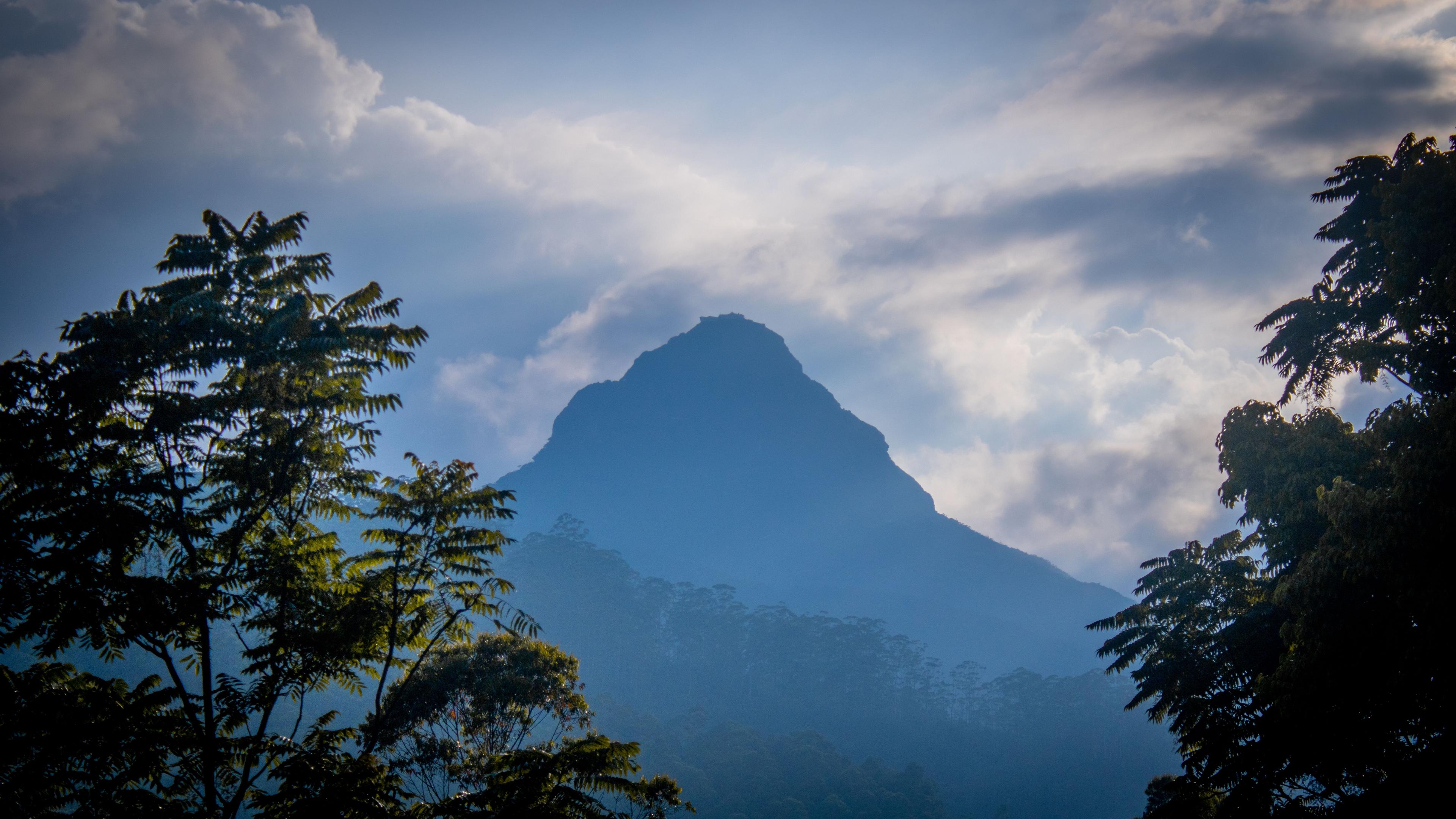
Known internationally as Adam's Peak, the 2,243-metre mountain rises in Sri Lanka's Central Highlands and has drawn pilgrims for generations. Official Sri Lanka Tourism describes the summit as the location of a sacred footprint: revered by Buddhists as the footprint of the Buddha, while Hindu and Muslim traditions associate it with Shiva and Adam respectively.
That layered meaning changes the climb completely. You are not simply ascending for a sunrise. You are entering a living pilgrimage route.
SRI PADA, ADAM'S PEAK AND THE SACRED FOOTPRINT
The Sinhala name Sri Pada means 'sacred footprint.' Near the summit is the rock formation around which the mountain's religious identity developed.
For Buddhist pilgrims, the peak is one of Sri Lanka's holiest mountains. Other religious traditions have read the footprint through their own beliefs, giving the mountain a rare multi-faith resonance.
A respectful visitor does not need to share a particular faith to recognize the significance of the place. The correct attitude is observation, patience and courtesy toward worshippers.
THE PILGRIMAGE SEASON
Official Sri Lanka Tourism states that the mountain is most often climbed from December to May and identifies April as the peak pilgrimage period.
During the main season, the route can be illuminated and supported by tea stalls and rest points, while large numbers of pilgrims climb through the night.
Weekends, holidays and important religious dates can be extremely crowded.
The pilgrimage atmosphere is one of the mountain's great strengths, but it also means the climb is not always quiet or fast.
A visitor who wants the experience should allow the crowd to be part of it rather than treating other pilgrims as an inconvenience.
THE NALLATHANNIYA ROUTE
For many travelers, the most practical ascent begins from Nallathanniya, also commonly associated with the Hatton side. The route is famous for its long sequence of steps and is the one most often used by visitors during the pilgrimage season.
The lower climb can feel almost social: tea stalls, lights and pilgrims create movement through the darkness.
Higher up, the staircase steepens and fatigue becomes more noticeable.
Exact timings vary too much to promise one number. Fitness, congestion, weather and rest stops can change the ascent substantially. Plan generously rather than trying to beat a fixed online time.
THE NIGHT CLIMB
Many travelers begin well before dawn in order to reach the summit for sunrise. That means the first hours take place in darkness.
A reliable light is still useful even when the pilgrimage-season trail is illuminated.
Wear footwear that remains comfortable after hours of steps.
Do not carry an unnecessarily heavy bag.
Climbing at night can disguise how much elevation remains. Pace yourself from the beginning; the steepest and most tiring sections come later.
THE FINAL ASCENT
As the summit approaches, steps become steeper and the trail can narrow behind slower groups.
During crowded periods, progress may be determined by the people ahead rather than your personal fitness.
Use handrails where available, avoid dangerous overtaking and do not pressure elderly pilgrims who may be moving slowly.
Many have traveled to the mountain for religious reasons far more important to them than your sunrise photograph.
SUNRISE AND THE FAMOUS SHADOW
On clear mornings, sunrise from the summit can reveal layer after layer of mountain ridges and valleys. The atmosphere changes rapidly from darkness and cold to light.
Adam's Peak is also famous for a triangular shadow that can appear on the western side of the mountain under suitable early-morning conditions.
Like any weather-dependent phenomenon, it should be treated as a possibility rather than a promise.
Cloud and mist can completely hide the sunrise.
The pilgrimage remains meaningful even when the horizon never turns dramatic.
AT THE SUMMIT
The summit is a sacred precinct. Follow instructions, respect queues and rituals, and avoid treating the shrine as a casual viewpoint.
Photography may be restricted in particular religious spaces. Observe signs and local behavior, and never interfere with worship for a photograph.
Temperatures before dawn can feel surprisingly cold after a warm, sweaty ascent, so put on a dry layer before waiting.
THE DESCENT
Reaching the summit is only half the physical effort.
The descent places repeated load on knees and legs, particularly after fatigue from the climb.
Move steadily, use rails where helpful and take short breaks.
Travelers with known knee problems should prepare conservatively and consider whether the climb is suitable for them.
Bright sun can become an issue on the descent, so sun protection matters even though the ascent began in darkness.
HOW DIFFICULT IS ADAM'S PEAK?
Adam's Peak is not technical mountaineering on the main pilgrimage route, but it is physically demanding because of the sustained ascent and very large number of steps.
People of many ages complete the pilgrimage, but that should not be interpreted as proof that it is easy for everyone.
Fitness, health, previous stair tolerance and weather all matter.
Anyone with significant cardiac, respiratory, joint or mobility concerns should seek appropriate medical advice before undertaking a prolonged climb.
WHAT TO WEAR AND BRING
• Comfortable shoes suitable for hours of stair climbing
• Lightweight breathable clothing for the lower climb
• Warm layer or light jacket for the summit
• Rain protection when conditions are uncertain
• Drinking water and simple energy snacks
• Headlamp or torch
• Sun protection for the descent
• A small bag rather than unnecessary luggage
FOOD, WATER AND REST STOPS
During the pilgrimage season, refreshments are commonly available along the main route, but visitors should not depend entirely on every stall being open.
Carry enough water for your needs and use refill or purchase opportunities responsibly.
Avoid leaving bottles, wrappers or other waste on the mountain.
RESPECTING THE PILGRIMAGE
Sri Pada is not a nightclub-style sunrise hike.
Dress and behave with awareness that people around you may be fulfilling a major religious vow.
Keep music low or use headphones if appropriate, avoid blocking devotional spaces and allow older pilgrims room to rest.
The atmosphere of shared effort is part of what makes the mountain special.
WEATHER AND OFF-SEASON CLIMBING
Outside the main pilgrimage season, rain, mist, leeches, reduced lighting and fewer services can change the experience significantly.
An old blog post should never be used as the final authority on an off-season ascent.
Check current local access and weather conditions before committing.
If thunderstorms, strong wind or severe rain affect the mountain, postponing the climb is a sensible decision.
PHOTOGRAPHY TIPS
At sunrise, a wide or moderate-wide lens can capture the mountain ridges and the scale of the summit atmosphere.
Low light before sunrise may require stabilization or higher ISO rather than a tripod that blocks crowded space.
Some of the strongest photographs are not only landscapes: pilgrims climbing steps, hands on rails, lights in the darkness and the transition from night to morning can tell the deeper story.
Always prioritize religious respect over photography.
WHERE TO STAY
Nallathanniya is convenient for travelers planning the common pilgrimage route.
Hatton is a broader transport hub and can connect the journey with Sri Lanka's tea country.
Staying close enough to rest before and after the climb is usually more sensible than adding a long transfer immediately after descending.
COMBINING ADAM'S PEAK WITH TEA COUNTRY
Adam's Peak fits naturally into a Central Highlands itinerary.
Travelers can connect the pilgrimage with tea estates, Hatton-area scenery, Nuwara Eliya or onward rail and road travel toward Ella.
Do not overload the same day after an overnight climb. Recovery, sleep and hydration should be part of the itinerary.
FREQUENTLY ASKED QUESTIONS
• How high is Adam's Peak? Official Sri Lanka Tourism lists the mountain at 2,243 meters.
• When is the main season? Sri Lanka Tourism says it is most often climbed from December to May, with pilgrimage activity peaking around April.
• Do I have to climb at night? No, but many visitors climb overnight to reach the summit around sunrise during the pilgrimage season.
• Is it a technical hike? The main route is primarily a long stepped pilgrimage climb rather than technical mountaineering, but it is physically demanding.
• Can I climb outside the season? Conditions and services can be very different. Check current local access and weather before attempting it.
• Is Adam's Peak a Buddhist site only? It is one of Sri Lanka's most sacred Buddhist pilgrimage sites, while other faith traditions also attach meaning to the summit footprint.
FINAL THOUGHTS
Adam's Peak is memorable because the effort, faith and landscape cannot be separated.
You climb beside grandparents, families, monks, young friends and travelers. The steps hurt. The summit may be cold. The sunrise may disappear behind cloud. Yet the mountain can still feel more significant than a perfect viewpoint reached easily.
At Ceylon Velo, Sri Pada is planned as a pilgrimage experience with hiking inside it - not the other way around.
Written By
Ceylon Velo
Lead Travel Curator at Ceylon Velo with a passion for uncovering the untold stories of the island.
Join the Journey
Subscribe to receive exclusive travel guides and island stories directly in your inbox.